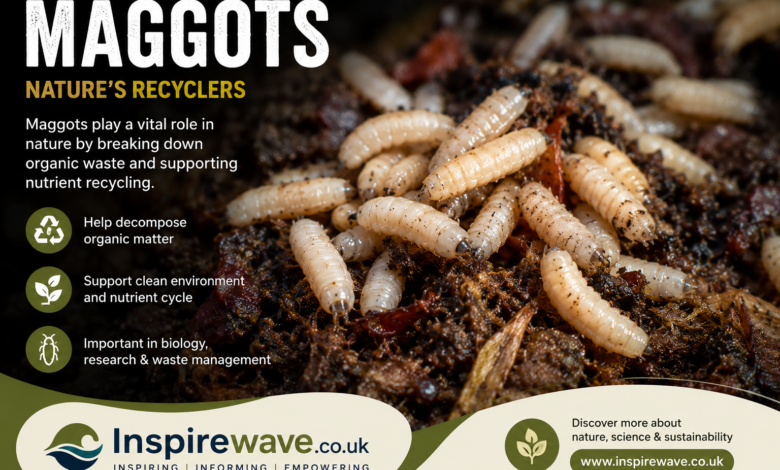
Maggots are the larval stage of flies, most commonly houseflies and blowflies, and they are widely found in decomposing organic matter such as food waste, animal remains, and unclean environments. Although they often create discomfort and concern for homeowners, maggots play a natural role in breaking down organic materials and supporting ecological recycling systems in nature.
In domestic settings, Maggots are usually a warning sign of hygiene issues or exposed waste that has attracted flies for egg-laying. Their sudden appearance can be alarming, but understanding their origin helps in controlling them effectively. Learning about maggots is essential for maintaining cleanliness, preventing infestations, and ensuring a safe living environment free from contamination risks.
What are maggots: biological overview and classification
Maggots are soft-bodied, legless larvae belonging to the order Diptera, which includes houseflies, blowflies, and other fly species. They are typically white or cream-colored and have a worm-like appearance, with a simple body structure designed for rapid feeding and growth. Maggots thrive in warm, moist environments rich in decaying organic matter.
These larvae are an essential stage in the fly life cycle and play a key role in decomposition. Maggots feed aggressively on rotting organic material, breaking it down into simpler substances. While they are important in natural ecosystems, their presence in homes, kitchens, or waste bins is considered unhygienic and indicates that flies have found a suitable breeding ground nearby.
Maggots life cycle explained from egg to adult fly
The life cycle of maggots begins when adult flies lay eggs on decomposing organic matter such as food scraps, garbage, or animal waste. These eggs hatch very quickly, often within 8 to 24 hours in warm temperatures, producing tiny larvae known as maggots. This rapid development explains why infestations can appear suddenly.
Once hatched, maggots enter a feeding stage where they consume large amounts of organic waste to support rapid growth. After several days of feeding and development, they enter the pupal stage, during which they transform into adult flies inside a protective casing. Eventually, mature flies emerge, ready to repeat the cycle, continuing the spread if conditions remain favorable.
Causes of maggots: why they appear in homes and surroundings
Maggots commonly appear due to improper waste disposal, exposed food, and poor sanitation practices that attract flies. Garbage bins that are left open or not cleaned regularly become ideal breeding sites. Once flies lay eggs on exposed organic material, maggots quickly develop and spread across the area.
Environmental conditions also play a major role in maggot infestations. Warm temperatures and humidity accelerate fly reproduction and maggot growth. Rotting food, dead insects, pet waste, and spilled organic matter all contribute to attracting flies. In many cases, maggots are a sign that hygiene practices need immediate improvement to prevent further infestation.
Are maggots dangerous: health risks and safety concerns
Maggots are not always directly harmful to humans, but they can indicate unsanitary conditions that may lead to bacterial contamination. Since they feed on decaying matter, they may carry bacteria from waste into surrounding environments, increasing the risk of indirect infection if they come into contact with food or surfaces.
In rare cases, maggots can cause myiasis, a medical condition where larvae infest living tissue or wounds. Although uncommon, this condition requires immediate medical treatment. While maggots are beneficial in nature, their presence indoors, especially near food or living spaces, should always be treated as a hygiene and health concern.
How to get rid of maggots fast: effective removal methods
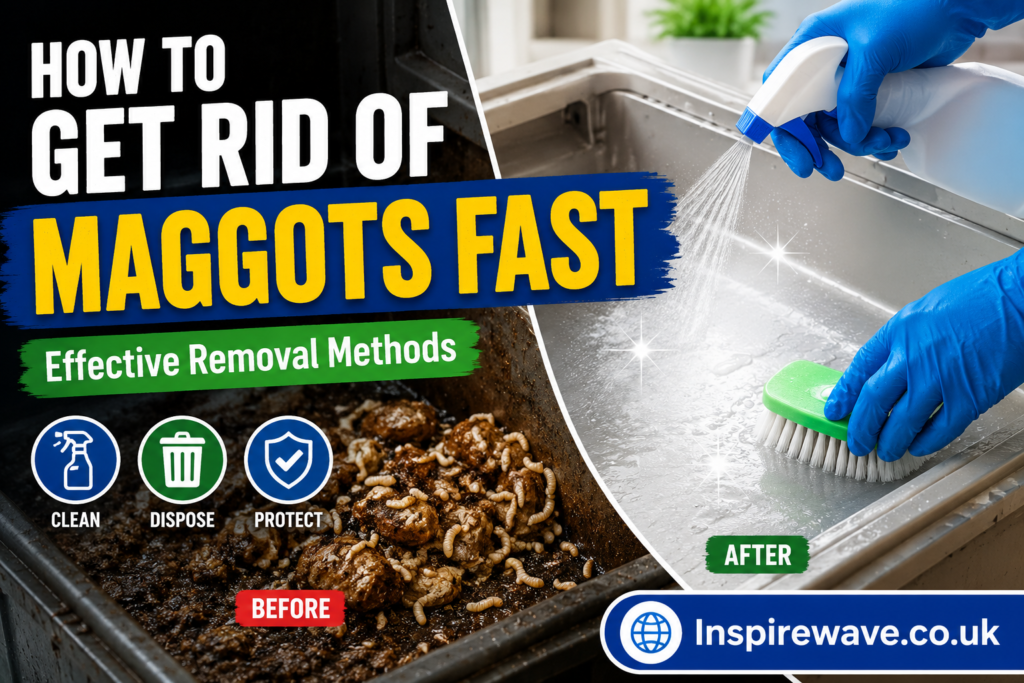
The fastest way to eliminate maggots is to remove their food source immediately. Any contaminated food, garbage, or organic waste should be disposed of properly in sealed bags. Without food, maggots cannot survive and will die quickly, preventing further infestation and spread.
Boiling water is one of the most effective natural methods to kill maggots instantly, especially in bins, drains, or outdoor areas. Disinfectants like bleach or vinegar can also be used to clean affected surfaces and eliminate bacteria. In severe cases, insecticides may be required, but safety precautions must always be followed during cleanup.
Prevention of maggots: long-term hygiene and control strategies
Preventing maggots begins with maintaining proper sanitation and waste management. Garbage should always be stored in sealed containers with tight-fitting lids to prevent flies from accessing organic material. Regular disposal of waste reduces the chances of fly egg-laying and infestation development.
Kitchen hygiene is equally important in preventing maggots. Food should not be left exposed, and spills must be cleaned immediately. Pet waste should be disposed of promptly, and bins should be washed regularly. By maintaining consistent cleanliness, the risk of maggots appearing in and around the home can be significantly reduced.
Natural role of maggots in the ecosystem and science
Maggots play an essential role in nature by breaking down dead organic matter and recycling nutrients back into the soil. This decomposition process supports plant growth and maintains environmental balance. Without organisms like maggots, waste would accumulate and take much longer to decompose naturally.
Beyond ecology, maggots are also used in forensic science to estimate the time of death in investigations based on their development stages. In medicine, sterile maggots are sometimes used in controlled environments to clean wounds by removing dead tissue. Despite their unpleasant appearance, maggots have valuable scientific and environmental applications.
Common myths and misconceptions about maggots
A common myth is that maggots appear spontaneously from rotting matter. In reality, they come from eggs laid by flies. Another misconception is that maggots only occur in dirty environments, but even clean homes can experience infestations if food is left uncovered or waste is exposed.
Some people also believe that all maggots are harmful, but most are harmless unless they come into contact with food or wounds. Understanding the biology of maggots helps reduce fear and encourages better hygiene practices. Accurate knowledge is key to managing infestations effectively and calmly.
When to call pest control or medical professionals
Severe maggot infestations that spread across multiple areas of a home may require professional pest control services. Experts can identify breeding sources, eliminate flies, and prevent future outbreaks using specialized treatments. This is especially important when infestations are recurring or widespread.
Medical attention is necessary if maggots are found in wounds or if signs of infection develop. Prompt treatment can prevent complications and ensure proper healing. In both cases, professional intervention ensures safe removal and helps restore a clean and healthy environment.
Conclusion
Maggots are a natural part of the decomposition process, but their presence in homes or living spaces signals hygiene issues that should not be ignored. Understanding their life cycle, causes, and behavior makes it easier to control and prevent infestations effectively through proper sanitation practices.
While maggots are often seen negatively, they also play important roles in nature, science, and medicine. With consistent cleanliness, proper waste management, and timely action, maggots can be easily prevented and controlled, ensuring a safe and healthy environment for everyday living.
Frequently asked questions
What causes maggots to appear in my house
Maggots appear when flies lay eggs on exposed food, garbage, or decaying organic material, especially in warm conditions.
How long does it take for maggots to turn into flies
Maggots usually develop into flies within 5 to 10 days depending on temperature and food availability.
Are maggots dangerous to humans
They are not usually dangerous, but they can carry bacteria and may pose risks in contaminated environments.
What kills maggots instantly
Boiling water, strong disinfectants, and insecticides can kill maggots quickly on contact.
Can maggots appear in clean homes
Yes, if food is left exposed or waste is not properly sealed, flies can still lay eggs.
How do I prevent maggots in garbage bins
Keep bins sealed, clean regularly, and dispose of waste frequently to avoid attracting flies.
Do maggots spread diseases
They can carry bacteria from decaying matter, but they are not primary disease carriers.
What temperature kills maggots naturally
High heat such as boiling water or temperatures above 50°C can effectively kill maggots.
You May Also Read: Mediterranean Diet Recipes