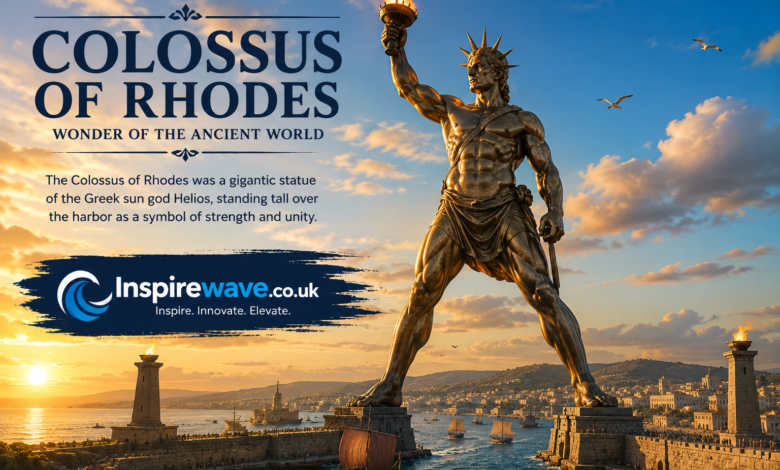
The Colossus of Rhodes is one of the most famous monuments from the ancient world. Known as one of the Seven Wonders of the Ancient World, this gigantic bronze statue stood on the Greek island of Rhodes and represented the sun god Helios. Even though the monument no longer exists, its story continues to fascinate historians, archaeologists, and travelers from around the world.
For centuries, the Colossus of Rhodes has symbolized human creativity, engineering excellence, and cultural pride. Its construction was an extraordinary achievement for its time, and its influence can still be seen in modern discussions about architecture and ancient civilizations. Learning about the Colossus of Rhodes helps us better understand the ambitions and achievements of the ancient Greeks.
What Was the Colossus of Rhodes?
The Colossus of Rhodes was a massive bronze statue dedicated to Helios, the Greek god associated with the sun. It was built by the people of Rhodes to celebrate their successful defense against a powerful invading force. The monument was designed not only as a religious symbol but also as a statement of independence and strength.
Ancient sources describe the statue as one of the tallest structures of its era. The Colossus of Rhodes quickly became famous throughout the Mediterranean world because of its enormous size and artistic beauty. Merchants, travelers, and rulers who heard stories about the statue viewed it as a remarkable example of human achievement and determination.
History of the Colossus of Rhodes
The history of the Colossus of Rhodes began after the famous Siege of Rhodes. During this conflict, the citizens successfully defended their city against Demetrius I of Macedon. Following their victory, the people wanted to commemorate the event with a monument that would honor Helios and celebrate their freedom.
Construction began around 292 BC and continued for approximately twelve years. Skilled workers, engineers, and artists collaborated on the ambitious project. Once completed, the Colossus of Rhodes became a symbol of prosperity and resilience. It reflected the wealth and confidence of Rhodes, which was one of the most important trading centers in the ancient Mediterranean.
How the Colossus of Rhodes Was Built
The construction of the Colossus of Rhodes was a remarkable engineering accomplishment. Builders used bronze plates attached to a strong iron framework. Large stones were added inside the structure to improve stability and ensure that the statue could withstand environmental pressures. These methods demonstrated the advanced technical knowledge available in ancient Greece.
Creating a statue of such enormous size required careful planning and innovation. Workers likely used ramps, scaffolding, and specialized tools to assemble the monument section by section. Despite the technological limitations of the ancient world, the builders successfully completed one of history’s most ambitious architectural projects, making the Colossus of Rhodes a lasting symbol of engineering brilliance.
Colossus of Rhodes Height and Appearance
One of the most impressive features of the Colossus of Rhodes was its extraordinary height. Historians estimate that the statue stood approximately 33 meters, or 108 feet, tall. At the time, very few structures could compare to its scale, making it a truly breathtaking sight for visitors arriving in Rhodes.
Although no complete images of the monument survive, historical descriptions suggest that it portrayed Helios wearing a radiant crown. Many artistic reconstructions have attempted to recreate its appearance. These interpretations often emphasize the grandeur and elegance of the statue, highlighting why the Colossus of Rhodes earned a place among the Seven Wonders of the Ancient World.
Location of the Colossus of Rhodes
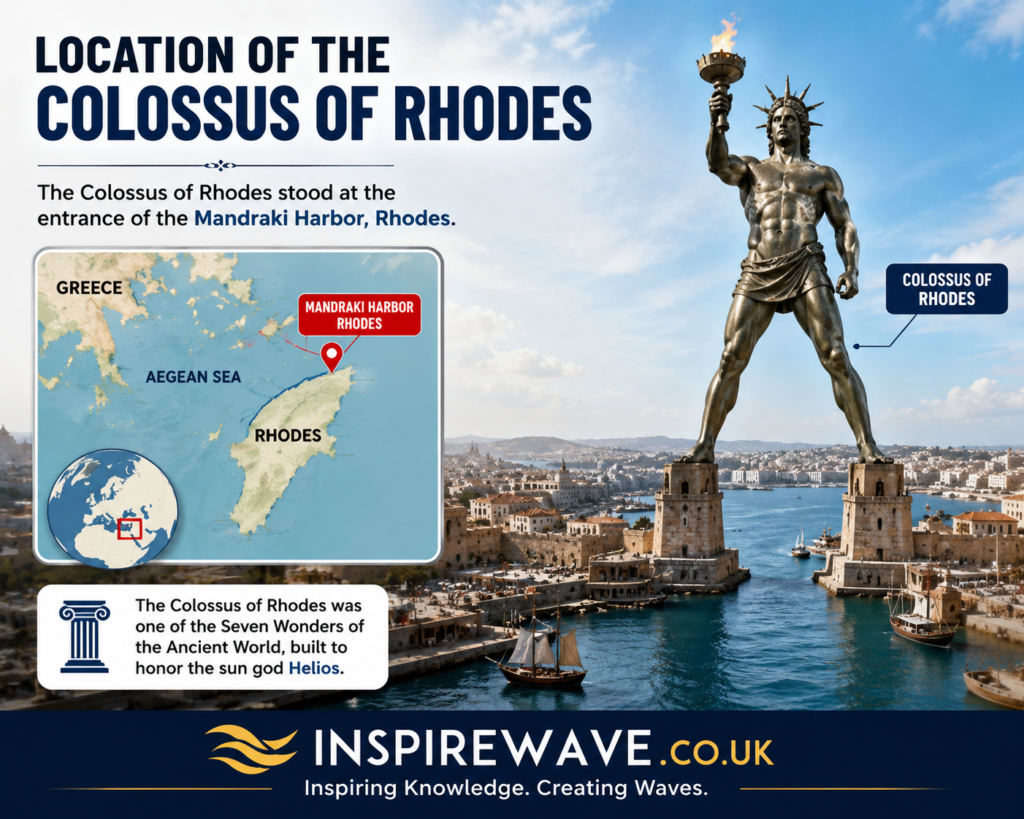
The Colossus of Rhodes was located on the island of Rhodes, which sits in the southeastern Aegean Sea. Rhodes was a wealthy and influential city-state that benefited from extensive trade networks. Its strategic location allowed it to become a major center of commerce, culture, and maritime activity during ancient times.
For many years, people believed that the statue stood directly over the entrance to Mandraki Harbor with ships passing between its legs. Modern scholars, however, generally reject this theory because it would have been structurally impractical. Most experts believe the monument stood on a large pedestal near the harbor or within the city itself.
Destruction of the Colossus of Rhodes
The Colossus of Rhodes stood proudly for approximately fifty-four years before disaster struck. Around 226 BC, a powerful earthquake hit the island and caused severe damage to the statue. The monument reportedly broke at the knees and collapsed, ending its relatively short existence as a standing wonder.
Even after its destruction, the remains of the Colossus of Rhodes continued to attract visitors. Ancient travelers were amazed by the enormous bronze fragments scattered across the ground. Several rulers offered financial assistance to rebuild the monument, but the people of Rhodes chose not to restore it, allowing the ruins to remain for centuries.
Interesting Facts About the Colossus of Rhodes
One fascinating fact about the Colossus of Rhodes is that the project was partially funded through the sale of military equipment left behind by defeated invaders. This transformation of weapons into a symbol of peace and victory added a deeper meaning to the monument and reflected the resilience of the Rhodian people.
Another interesting detail is that the fallen remains reportedly remained visible for more than eight hundred years. Ancient writers noted that even the statue’s broken pieces inspired awe. The enormous fingers alone were said to be larger than many ordinary statues, demonstrating the incredible scale of the original structure.
Colossus of Rhodes and the Seven Wonders of the Ancient World
The Colossus of Rhodes earned its place among the Seven Wonders of the Ancient World because of its extraordinary size, artistic quality, and engineering sophistication. Ancient observers viewed the monument as a masterpiece that represented the highest achievements of Greek civilization and creativity.
When compared with other wonders such as the Lighthouse of Alexandria and the Statue of Zeus at Olympia, the Colossus of Rhodes stood out for its symbolic significance. It celebrated freedom, victory, and devotion while showcasing the ability of human beings to create monumental works that could inspire generations.
Legacy of the Colossus of Rhodes
Although the original monument no longer exists, its influence continues to be felt today. The story of the Colossus of Rhodes has inspired artists, historians, architects, and filmmakers for centuries. It remains one of the most recognizable symbols of the ancient world and a powerful reminder of humanity’s creative potential.
Modern proposals have occasionally suggested rebuilding the Colossus of Rhodes as a cultural landmark and tourist attraction. While such projects remain controversial, they demonstrate the enduring fascination people have with this ancient wonder. The monument’s legacy survives not through its physical presence but through the stories and inspiration it continues to provide.
Conclusion
The Colossus of Rhodes remains one of the most remarkable achievements in human history. From its origins as a celebration of victory to its reputation as one of the Seven Wonders of the Ancient World, the monument captured the imagination of people across generations. Its construction showcased extraordinary engineering skill and artistic vision.
Even though the statue was destroyed by an earthquake more than two thousand years ago, the legacy of the Colossus of Rhodes continues to thrive. Historians, travelers, and enthusiasts still study its history, location, height, and destruction. As a symbol of resilience and innovation, it remains one of the most fascinating landmarks ever created by ancient civilization.
FAQs
What was the Colossus of Rhodes?
The Colossus of Rhodes was a giant bronze statue of the Greek sun god Helios built on the island of Rhodes.
How tall was the Colossus of Rhodes?
The statue was approximately 33 meters or 108 feet tall.
Who built the Colossus of Rhodes?
The monument was designed and built by the sculptor Chares of Lindos.
Where was the Colossus of Rhodes located?
It stood in the city of Rhodes on the Greek island of Rhodes.
What destroyed the Colossus of Rhodes?
A major earthquake in 226 BC caused the statue to collapse.
Why is the Colossus of Rhodes famous?
It is famous for being one of the Seven Wonders of the Ancient World and an outstanding example of ancient engineering.
You May Also Read: Egypt Flag